
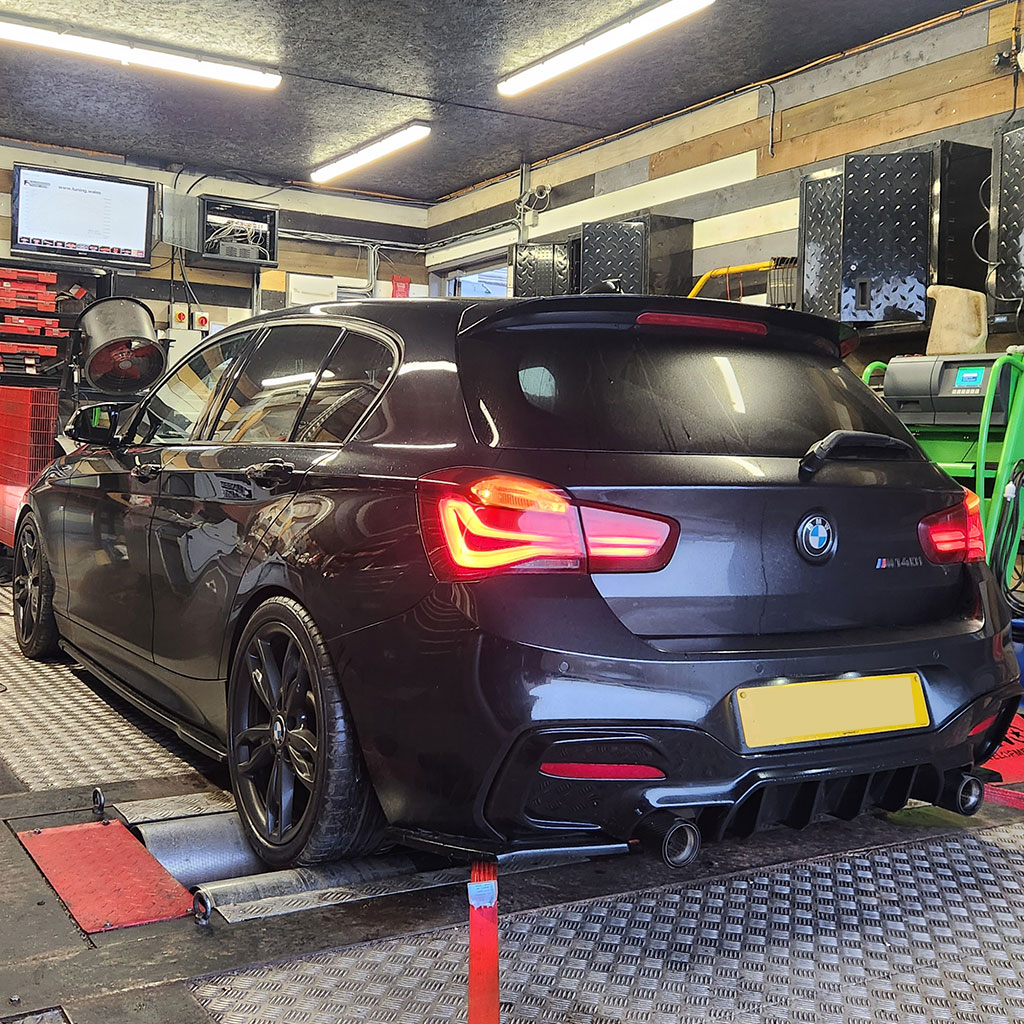
Start with the question the car needs answered
If you want to develop a modified engine, send a list of the fitted parts and your intended use. If the car already hesitates, enters limp mode or behaves differently when warm, describe that first. Another calibration should follow an understanding of the problem.
For Caerphilly, Bedwas and Rhymney Valley enquiries, the work takes place at our Llandow workshop. The same technicians can discuss the current setup, the investigation and the scope of any subsequent tuning.
Give the workshop a complete hardware history
Include the registration, engine, gearbox and drivetrain. List the turbo, intake, intercooler, exhaust and fuelling changes where applicable. Tell us the fuel used, who installed the hardware and whether there is an existing tune or original software backup.
A part described as upgraded does not establish its specification. Part numbers, invoices or clear photographs can help clarify the brief. The aim is to agree a calibration for the actual configuration rather than a stage label alone.
Bring evidence of the behaviour
Existing fault codes, a previous dyno graph and a written description of when the symptom occurs are useful. Explain whether it happens at a particular load, temperature or transmission mode. Do not clear information just to make a warning disappear before the appointment.
We can discuss controlled testing and diagnosis around that question. A graph showing one peak figure cannot establish the cause of a drivability problem by itself.
Agree the next step before travelling
The initial booking may be an investigation, a calibration session or a discussion of further hardware requirements. Send the brief through our vehicle enquiry; we confirm support and the proposed work before an appointment is agreed.
For a healthy standard car, start with Stage 1 engine tuning. Where transmission behaviour is part of the problem, include it in the gearbox enquiry.
Mobile Stage 1 and ECU solutions, or workshop chassis dyno tuning